Linguine allo Scoglio (Seafood Pasta)
Main Dish · Hosting Menu · Dairy-Free · Nut-Free · Time: 1 hr 15 min · Servings: 2-3 · Difficulty: Medium · Rated 5/5 by 1 reader
My first introduction to the region of Abruzzo came in 2022, when my then fiancé, now husband, shared countless stories of the summers he spent there as a child. I loved hearing about his family holidays in Fossacesia Marina, long days by the sea with his extended family and the lifelong friendships he forged while growing up.
Some of my favourite memories are not even my own, but the ones he has shared with me. He has beautiful photographs of himself as a toddler basking in the sun, splashing in the water, and playing along the shoreline. Yet, the story I love most is a simple one. His mother would hand him one thousand lire and say, "You can either spend it on the arcade machines or on gelato. You cannot have both." It always makes me smile because, in that small moment, I catch a glimpse of the little boy who became the man I know and love today.
For me, one of the traditions I look forward to most is arriving in Abruzzo after the six hour drive from northern Italy and sitting down for our first meal at Da Rocco, just a stone's throw from our beach house. Over the years, I have enjoyed many versions of Linguine allo Scoglio, but I would say the one served at Da Rocco is among the very best.
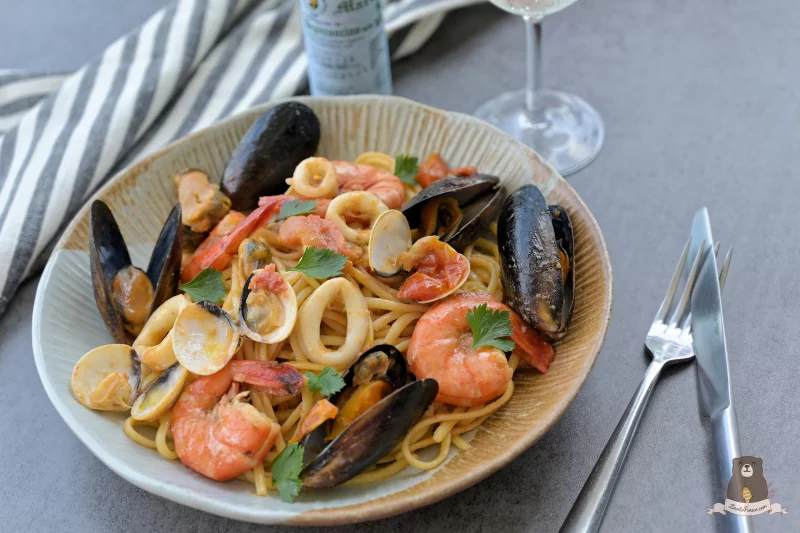
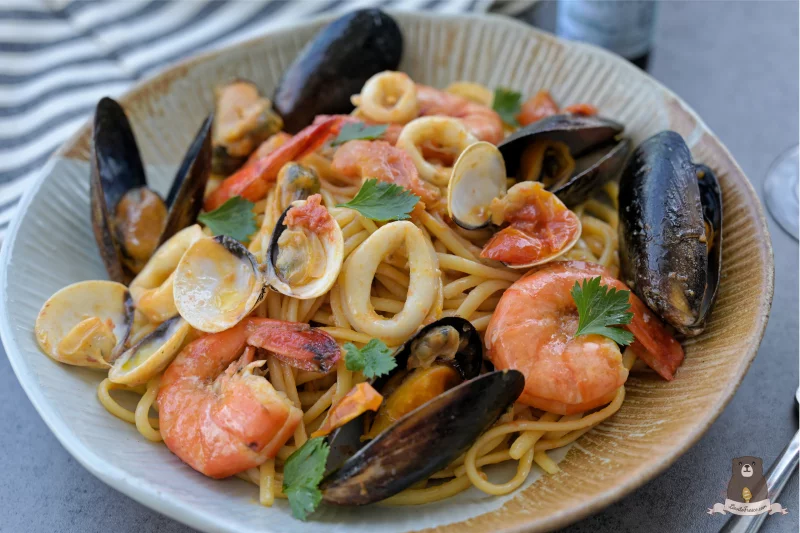
The dish is beautifully simple. The seafood is incredibly fresh and sweet, carrying the briny flavour of the Adriatic Sea in every bite. The sauce is light yet deeply satisfying, with cherry tomatoes that have been cooked until they sweat and almost blister, releasing their juices and creating a delicate sweetness that perfectly complements the seafood.
When we finally had the chance, I asked my husband to ask the manager of the restaurant what the secret was to a great Linguine allo Scoglio. His answer was wonderfully simple: fresh seafood and cherry tomatoes cooked until they are almost blistered. Sometimes, the best dishes are not about complexity at all, but about allowing exceptional ingredients to speak for themselves.
Back home, I wanted to recreate that feeling in our kitchen. This recipe is my own adaptation of that memorable meal, built on a rich homemade shrimp broth rather than white wine. It is still light and briny, but with just enough body to gently coat each strand of linguine.
We make this dish often for leisurely paced weekend dinners, usually with a piece of crusty bread for mopping up the last of the sauce. I have also served this dish to my husband's childhood friends and their families, who are from the region, and it received the stamp of approval from everyone at the table. Their feedback was simple: it tasted like something they would happily order at a restaurant.
It is one of those meals that transports you straight to the Adriatic coast, no plane ticket required.
What Does Allo Scoglio Mean?
In Italian, allo scoglio translates literally to "of the rocks" or "from the reef." The name refers to the rocky coastline where shellfish and other seafood are traditionally harvested, particularly in Italy's coastal regions.
In cooking, allo scoglio describes a style of seafood pasta that celebrates the flavours of the sea. It is typically prepared with a medley of seafood such as prawns, mussels, clams, squid, and sometimes scampi, gently cooked with garlic, olive oil, and tomatoes. The sauce is intentionally light, allowing the natural sweetness and briny flavours of the seafood to take centre stage.
Every coastal region and family has its own interpretation of allo scoglio. Some versions include white wine, while others rely solely on the juices released by the seafood and tomatoes to create a delicate, flavourful sauce. The common thread is simple: use the freshest seafood you can find and let the ingredients speak for themselves.
For my version, I have made a small adaptation. Living in Singapore, it can be difficult to get hold of fresh scampi, so I use tiger prawns instead. To me, that is the beauty of cooking. It allows us to adapt and substitute ingredients without compromising flavour, creating dishes that honour tradition while making the most of what is fresh and readily available to us.
For me, allo scoglio captures the essence of coastal Italian cooking: simple ingredients, treated with care, and transformed into something truly memorable.
Why You'll Love this Linguine allo Scoglio
- Inspired by the Adriatic coast: This recipe is inspired by the seafood pasta I have enjoyed during visits to Abruzzo, where fresh seafood and simple ingredients take centre stage.
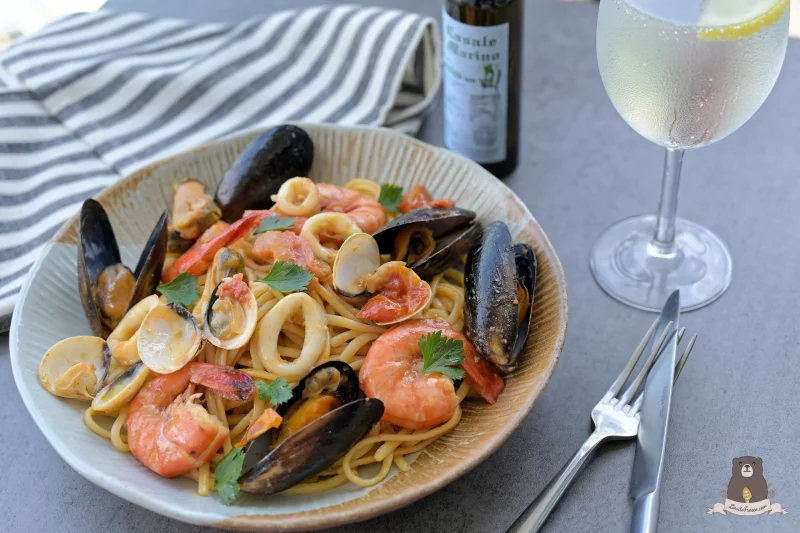
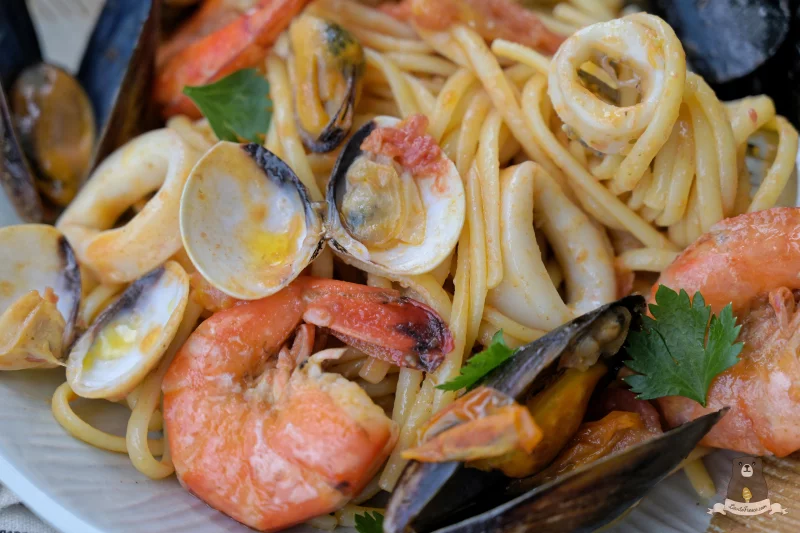
- Packed with different types of seafood: Clams, mussels, tiger prawns and squid create a generous and flavourful seafood pasta.
- Made with a homemade seafood broth: The reserved prawn heads are used to make a quick, flavourful broth that adds extra depth to the sauce.
- No wine required: Instead of white wine, this version builds flavour with seafood juices, cherry tomatoes and homemade prawn broth.
- Perfect for a special dinner: While impressive enough for entertaining, this Linguine allo Scoglio can also be made at home for a leisurely weekend meal.
Ingredient Notes and Substitutions
- Seafood: The beauty of Linguine allo Scoglio is that you can use a variety of seafood depending on what is fresh and available. This recipe uses tiger prawns, clams, mussels and squid for a delicious combination of sweet, briny and delicate flavours.
- Tiger Prawns: Tiger prawns are used instead of scampi because they are easier to find in Singapore. The prawn heads are also reserved to make a quick homemade seafood broth, adding extra depth of flavour to the sauce.
- Clams and Mussels: These shellfish release naturally salty and flavourful juices as they cook. Be sure to strain the cooking liquid before adding it to the sauce to remove any sand or grit.
- Squid: Squid adds a tender, delicate texture to the dish. Avoid overcooking it, as it can quickly become tough and rubbery.
- Cherry Tomatoes: Cherry tomatoes add natural sweetness and balance the briny flavours of the seafood. They create a light, flavourful sauce without making the dish overly tomato-heavy.
- Linguine: Linguine works beautifully with this seafood sauce because its long, flat shape helps hold the flavours of the sauce. Spaghetti can also be used as a substitute.
- Seafood Substitutions: You can adjust the seafood based on what is fresh and available. Scampi, other types of prawns, scallops or additional shellfish can also work well in this recipe.
Tips for Making the Best Linguine allo Scoglio
- Use the freshest seafood you can find: Since seafood is the star of this dish, fresh, good-quality seafood will make a noticeable difference to the final flavour.
- Do not overcook the seafood: Prawns and squid can become tough and rubbery when overcooked. Cook them carefully and add them back to the pasta towards the end when needed.
- Reserve the shellfish cooking liquid: The juices released by the clams and mussels are full of natural seafood flavour. Strain the liquid carefully before adding it to the sauce to remove any sand or grit.
- Be careful when adding salt: Shellfish cooking liquid is naturally salty, so always taste the sauce before adding extra salt.
- Finish cooking the pasta in the sauce: Transfer the linguine to the seafood sauce while it is still slightly undercooked. This allows the pasta to absorb more flavour as it finishes cooking.
- Use pasta water if needed: A small amount of reserved pasta water can help loosen the sauce and bring everything together.
- Serve immediately: Linguine allo Scoglio is best enjoyed freshly cooked while the seafood is tender, the pasta is perfectly al dente and the sauce is at its best.
Frequently Asked Questions
- Can I store leftover Linguine allo Scoglio?
Yes, although this seafood pasta is at its absolute best when freshly cooked. Store any leftovers in an airtight container in the refrigerator and consume them promptly. -
How do I reheat seafood pasta?
Reheat the pasta gently in a pan over low heat with a small splash of water if needed to loosen the sauce. Avoid overheating the seafood, as prawns and squid can become tough. -
Can I make Linguine allo Scoglio without white wine?
Yes. This recipe does not use white wine. Instead, the sauce gets its flavour from the juices released by the clams and mussels, homemade prawn broth and sweet cherry tomatoes. -
What seafood can I use for Linguine allo Scoglio?
You can use a variety of seafood depending on what is fresh and available. Clams, mussels, prawns, squid and scampi are all commonly used in different versions of the dish. -
Can I use frozen seafood?
Yes, good-quality frozen seafood can be used when fresh seafood is not available. Thaw it properly before cooking and drain away any excess water. -
Why is my seafood pasta sauce too salty?
Shellfish naturally release salty cooking liquid, so it is important to taste the sauce before adding extra salt. If needed, use a little reserved pasta water to help loosen and balance the sauce. -
Can I use spaghetti instead of linguine?
Yes. Spaghetti is a good substitute if you do not have linguine. Long pasta shapes work particularly well with this light seafood sauce. -
Is Linguine allo Scoglio best served immediately?
Yes. For the best texture and flavour, Linguine allo Scoglio is best enjoyed freshly cooked while the seafood is tender and the pasta is perfectly al dente.
What to Serve with Linguine allo Scoglio
Turn your Linguine allo Scoglio into a complete Italian-inspired meal with these delicious recipes from Lievito Fresco:
- Pizza al Taglio (Roman-Style Pan Pizza) – Serve in small slices as a shareable starter before enjoying your seafood pasta.
- Overnight No-Knead Focaccia Bread – A delicious side to enjoy alongside your meal and perfect for soaking up the flavourful seafood sauce.
- Caramel Flan – Finish the meal with this smooth and creamy caramel dessert, which can conveniently be made ahead.
Ingredients
- 500 g Purged Clams
- 500 g Cleaned Mussels
- 175 g Linguine
- 150 g Squid, cleaned and sliced
- 150 g Cherry Tomatoes, halved
- 8 pcs Tiger prawns (keep 2 whole for garnish, if desired)
- 2 cloves Garlic
- 3 sprigs Fresh parsley, chopped
- Chili flakes (to taste)
- Salt (to taste)
- Extra Virgin olive oil
For the Seafood Broth (using the reserved tiger prawn heads)
- 8 pcs Heads from 8 shrimp (reserved after cleaning)
- 100 ml water
Directions
- Prep the Garlic, Tomatoes & Parsley Peel and lightly crush the garlic cloves, then set aside. Halve the cherry tomatoes to help them soften more quickly and release their juices as they cook. Roughly chop a few sprigs of parsley and set aside.
- Prepare the Seafood <p class="isSelectedEnd">Clean the tiger prawns and remove the heads, setting the heads aside for the shrimp broth. Using kitchen scissors, cut along the back of each prawn and remove the dark vein.</p><p>If using whole squid, remove the head, innards, and clear quill, then peel off the pink spotted skin and rinse thoroughly. A simple trick is to start by peeling the skin from the squid's fins and gently pull in the opposite direction, allowing the rest of the skin to come away easily. Slice the cleaned squid into rings and set aside with the prawns.</p>
- Make the Seafood Broth <p class="isSelectedEnd">Heat a drizzle of olive oil in a small saucepan over medium heat. Add the reserved shrimp heads, one whole peeled garlic clove, and a pinch of chilli flakes. Sauté for 3 to 4 minutes, gently crushing the shrimp heads with the back of a spoon to release their flavour.</p><p>Pour in 100 ml of water and bring to a gentle simmer. Cook for 5 to 7 minutes, then strain the broth through a fine sieve, pressing firmly on the shrimp heads to extract as much flavour as possible. Discard the solids and reserve the seafood broth.</p>
- Precook the Tiger Prawns & Squid <p class="isSelectedEnd">In a clean pan, heat a drizzle of extra virgin olive oil over medium heat. Season the tiger prawns lightly with salt and cook for about 1½ minutes per side, or until they are just cooked through. Transfer to a plate.</p><p>Using the same pan, add the squid and cook for 45 seconds to 1 minute per side, depending on the size of the rings. Be careful not to overcook the prawns or squid, as both can quickly become rubbery and tough. Transfer the squid to the plate with the prawns and discard any residual juices left in the pan.</p>
- Cook the Mussels, Clams & Cherry Tomatoes <p class="isSelectedEnd">In a large pan, heat a drizzle of olive oil over medium heat and sauté one garlic clove until fragrant. Add the cherry tomatoes, season lightly with salt, and cook for 10 to 15 minutes, stirring occasionally, until they soften, begin to sweat, and almost blister. As they break down, they release their juices and create a naturally light, reddish sauce.</p><p class="isSelectedEnd">Meanwhile, place the mussels and clams in a separate pot and cover with a lid. Cook over medium heat for 5 to 7 minutes, shaking the pot occasionally, until the shells have opened and released their juices. Discard any mussels or clams that remain closed, then strain and reserve the cooking liquid.</p><p>Once cool enough to handle, remove the meat from half of the mussels and clams and set it aside. I like to do this because the shelled seafood is easier to eat and can be mixed through the pasta at the end, ensuring every serving gets plenty of seafood. Leave the remaining mussels and clams in their shells for a beautiful seafood presentation.</p><p></p>
- Cook the Linguine Bring a large pot of generously salted water to a boil. Cook the linguine until it is about halfway cooked according to the package instructions, as it will finish cooking in the seafood sauce. Drain the pasta, reserving a little of the pasta water if needed.
- Finish the Linguine allo Scoglio <p class="isSelectedEnd">Keeping the cherry tomatoes in the pan, pour in the reserved seafood broth and the strained mussel and clam cooking liquid. Bring everything to a gentle simmer for about 2 minutes, allowing the flavours of the sea and tomatoes to come together.</p><p>Add the partially cooked linguine, squid, and tiger prawns, then toss well to coat everything in the sauce. Continue cooking for 4 to 6 minutes, stirring occasionally, until the linguine is al dente and has absorbed the flavours of the seafood broth. Taste and adjust the seasoning with salt as needed.</p><p class="isSelectedEnd">Add the mussels and clams, along with the shelled seafood set aside earlier. Gently toss everything together and cook for 1 minute, just until heated through. Turn off the heat and sprinkle over the chopped parsley.</p><p class="isSelectedEnd">Divide the pasta among serving plates, arranging the mussels, clams, and whole tiger prawns on top for a beautiful presentation. Finish with a light drizzle of extra virgin olive oil and serve immediately.</p><p>Enjoy your homemade Linguine allo Scoglio! 🍝🦐🌿</p>